

Is Freshly Roasted Coffee Better? The Real Story
Table of Contents
- The Case for Freshly Roasted Coffee
- Understanding the Coffee Degassing Period
- Why Oxidation and Flavor Degradation Matter
- How to Tell If Coffee Beans Are Fresh
- The Best Way to Store Coffee Beans for Maximum Longevity
- Freshly Roasted vs. Supermarket Coffee: What Changes
- Brewing Method and the Peak Flavor Window
- Conclusion
- Frequently Asked Questions
Last Updated: September 23, 2026
The Case for Freshly Roasted Coffee
Freshly roasted coffee isn't just a preference, it's a measurable difference in what ends up in your cup. The moment beans leave the roaster, they begin a transformation that determines whether you're drinking complexity or drinking stale. At RMR COFFEE, we roast to order specifically because the timeline matters.
Here's the core tension: freshly roasted coffee isn't immediately ready to brew. That's the part most guides skip over. There's a window, sometimes days, where the beans are technically fresh but not yet at peak flavor. Understanding this window separates people who chase "fresh" as a marketing term from people who actually get better coffee.
The difference between a bag roasted last week and a bag roasted three months ago is stark. Aroma fades. The bright, complex notes flatten. What you taste shifts from vibrant to muted. But the real story isn't just about age, it's about what happens during those critical first days after roasting, and how you can time your brew to hit the sweet spot.
Understanding the Coffee Degassing Period
After roasting, coffee beans release carbon dioxide in a process called degassing. This isn't optional, it's chemistry. The beans need time to shed this gas before they're optimal for brewing.
For the first 24 to 48 hours after roasting, degassing is most active. During this phase, if you try to brew, the CO2 escapes during extraction and creates uneven contact between water and grounds. Your espresso pulls too fast. Your pour-over tastes thin. The coffee hasn't settled into its final form yet.
Different roast levels degas at different rates. Light roasts typically need 5 to 7 days before they hit their peak. Medium roasts usually peak around 7 to 10 days. Dark roasts, which have less trapped gas, can be ready sooner, sometimes 3 to 5 days. This isn't arbitrary. The roast profile determines how much CO2 is locked inside, and that determines how long the process takes.
The one-way valve on coffee bags exists for this exact reason. It lets gas escape without letting oxygen in. This is why vacuum-sealed bags without valves are a red flag, they can't degas properly, and the pressure builds until something gives.
Why Oxidation and Flavor Degradation Matter
Once degassing completes, a different process takes over: oxidation. Oxygen slowly breaks down the volatile compounds that create aroma, sweetness, and complexity. This is irreversible.
Freshly roasted coffee is packed with volatile compounds, the molecules that make coffee smell incredible and taste nuanced. Oxidation attacks these compounds. Each day that passes, some of these molecules degrade. The aroma weakens. The sweetness flattens. The tasting notes that made the coffee interesting become generic.
The timeline depends on storage. Beans in an airtight container with minimal headspace degrade slowly. Beans exposed to air, light, and heat degrade fast. A bag left open on the counter loses quality noticeably within days. A sealed container in a cool, dark place stays good for weeks.
This is why supermarket coffee tastes the way it does. Those bags have been sitting on shelves for months, sometimes longer. The roast date is often missing or months old. Oxidation has already won. What you're tasting isn't coffee, it's the ghost of coffee, the compounds that survived the long slide from roaster to shelf to your grinder.
Freshly roasted coffee from a roaster who ships quickly is fundamentally different. The oxidation clock just started. You're drinking coffee that still has most of its volatile compounds intact. The aroma is bold. The sweetness is present. The complexity is real.
How to Tell If Coffee Beans Are Fresh
The simplest indicator is the roast date. If there's no roast date on the bag, that's your answer right there, the roaster doesn't want you to know. A visible roast date is the first sign you're dealing with someone who takes freshness seriously.
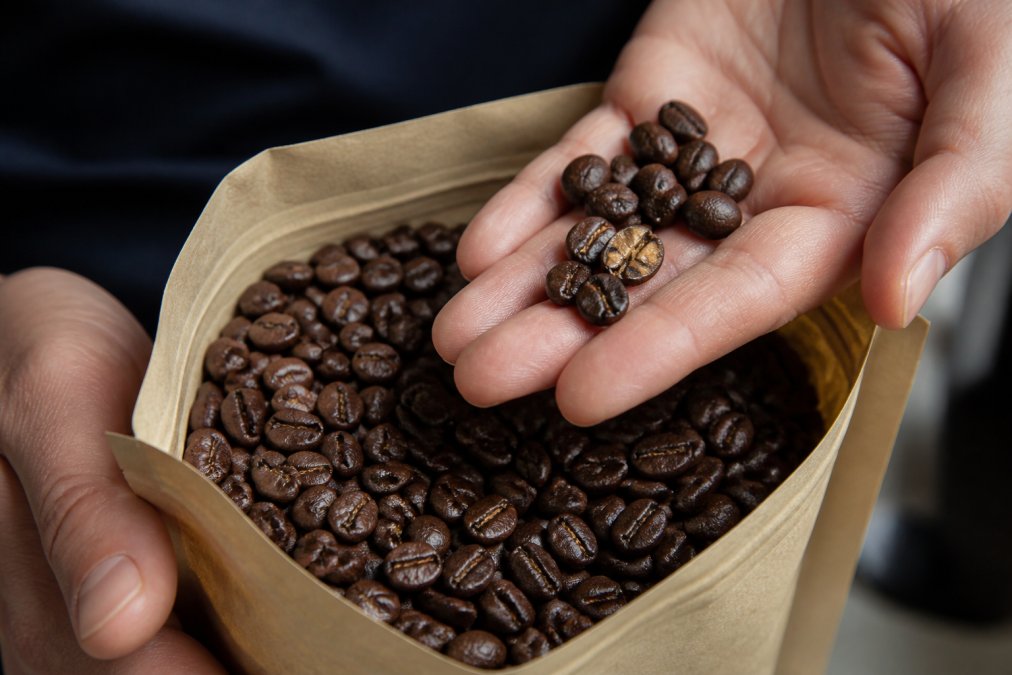
Beyond the date, look at the beans themselves. Freshly roasted beans have a visible sheen, an oily surface that catches light. This sheen comes from oils that have migrated to the surface during roasting and the early degassing phase. Stale beans look dull and matte. The oils have oxidized or been absorbed back into the bean.
Single Origin Favorites Sample Pack →
Break a bean open if you can. Fresh beans have a clean break with a visible interior that's slightly lighter than the exterior. The interior should show the roast profile clearly, you should be able to see where the heat penetrated. Stale beans often look more uniform in color throughout, or the interior looks darker and more brittle.
The aroma test is immediate and honest. Fresh coffee smells bold and complex. You should detect multiple notes, maybe floral, maybe fruity, maybe nutty depending on the origin and roast. Stale coffee smells flat. It might smell like coffee, but it doesn't smell like that specific coffee. The complexity is gone.
The Best Way to Store Coffee Beans for Maximum Longevity
Storage is where most people sabotage themselves. They buy fresh coffee and then leave it in a clear container on the counter next to the stove. Light, heat, and air are the three enemies of freshness, and they just invited all three in.
The ideal storage container is airtight, opaque, and kept in a cool, dark place. A sealed bag with a one-way valve works if you don't open it constantly.
Temperature matters more than most people realize. Room temperature is acceptable. Cooler is better.
Whole beans last longer than ground coffee. Grinding dramatically increases surface area, which accelerates oxidation. Grind only what you'll use in the next few days. This is non-negotiable if freshness matters to you.
| Storage Method | Optimal Duration | Best For | Key Consideration |
|---|---|---|---|
| Sealed bag with valve, room temperature | 2-4 weeks | Most home brewers | Keep away from light and heat |
| Airtight container, room temperature | 2-4 weeks | Daily drinkers | Dark, opaque container essential |
| Airtight container, refrigerator | 4-8 weeks | Occasional brewers | Use sealed container to prevent condensation |
| Airtight container, freezer | 2-3 months | Long-term storage | Allow beans to reach room temperature before opening |
Freshly Roasted vs. Supermarket Coffee: What Changes
The difference isn't subtle. Supermarket coffee has been through a supply chain that prioritizes shelf stability over flavor. The beans were roasted weeks or months ago. They've been exposed to fluorescent lights, temperature fluctuations, and air every time someone opens the shelf. The volatile compounds that create complexity have largely oxidized away.
Freshly roasted coffee from a dedicated roaster arrives at your door days after roasting. It's still in the active degassing phase. The volatile compounds are intact. The aroma is bold. The sweetness is present. When you brew it, you're tasting what the roaster intended, the origin characteristics, the roast profile, the full range of what those beans can deliver.
The sensory difference is immediate. Supermarket coffee tastes one-dimensional. It tastes like coffee in the abstract sense. Freshly roasted coffee tastes specific. You can taste the origin, maybe the brightness of an African bean, maybe the chocolate notes of a South American bean.
Brewing Method and the Peak Flavor Window
The ideal resting period before brewing depends on your brewing method. This is the detail that separates people who understand coffee from people who just want coffee.
Conclusion
Freshly roasted coffee is better, but not in the way most marketing suggests. It's not better the moment it leaves the roaster. It's better because it still has the volatile compounds that create complexity, sweetness, and aroma. It's better because oxidation hasn't yet flattened the flavor profile. It's better because you're tasting what the roaster actually intended.
Frequently Asked Questions
Does freshly roasted coffee taste better than older beans?
Yes, freshly roasted coffee delivers more complex aroma, sweetness, and texture than stale beans. However, 'fresh' doesn't mean drink it immediately. Most beans reach peak flavor 5-7 days after roasting, once degassing completes. After 2-3 weeks, oxidation begins breaking down volatile compounds, dulling the cup. Supermarket coffee, often roasted weeks or months ago, lacks the brightness and complexity of freshly roasted beans consumed within their optimal window.
How long should you wait to drink freshly roasted coffee?
Wait 3-7 days for optimal flavor, depending on roast level. Light roasts need 5-7 days to degas fully; dark roasts often peak around day 3-5. Drinking coffee immediately after roasting tastes flat because CO2 is still escaping. The one-way valve on bags lets gas escape while blocking oxygen entry. After the peak window closes, oxidation accelerates flavor degradation. Roasted-to-order services like RMR Coffee time delivery to arrive near peak flavor, eliminating the guesswork.
What is the best way to store coffee beans to keep them fresh longer?
Store beans in an airtight container away from light, heat, and moisture. Keep them at room temperature. Whole beans last 2-3 weeks at peak quality; ground coffee stales in 1-2 weeks due to increased oxygen exposure. Use bags with one-way valves if buying pre-roasted, as they allow CO2 to escape during degassing while blocking oxygen entry. Buy only what you'll use in 2-3 weeks.
How can I tell if coffee beans are fresh or stale?
Fresh beans look glossy and vibrant in color; stale beans appear dull and faded. Check the roast date on the bag, beans roasted within 1-2 weeks are ideal. Smell the beans: fresh coffee has a bold, aromatic aroma; stale beans smell flat or musty. Taste is the final test: fresh beans deliver bright acidity, complex sweetness, and full body; stale coffee tastes sour, thin, or bitter. If beans are more than 3 weeks old or lack a visible roast date, they're likely past their peak.